My Roles
Project Manager
Lead Designer
Lead Programmer (C#)
Developed in
Unity Engine
Duration
Platform
2 weeks
PC
Release
Student Project
September 2023
Intro
Survivor Painter is a PvP party game; the goal was to design a retro-inspired multiplayer experience that could recapture the simplicity and immediacy of Atari classics while still introducing fresh mechanics for strategy and replayability.
Key goals:
-
Keep rules simple and easy to learn in seconds.
-
Focus on competitive fun for short party sessions.
-
Use Atari-inspired limitations (tile-based graphics, restricted color palette, minimal input complexity) as a design driver, not a constraint.

Design Approach
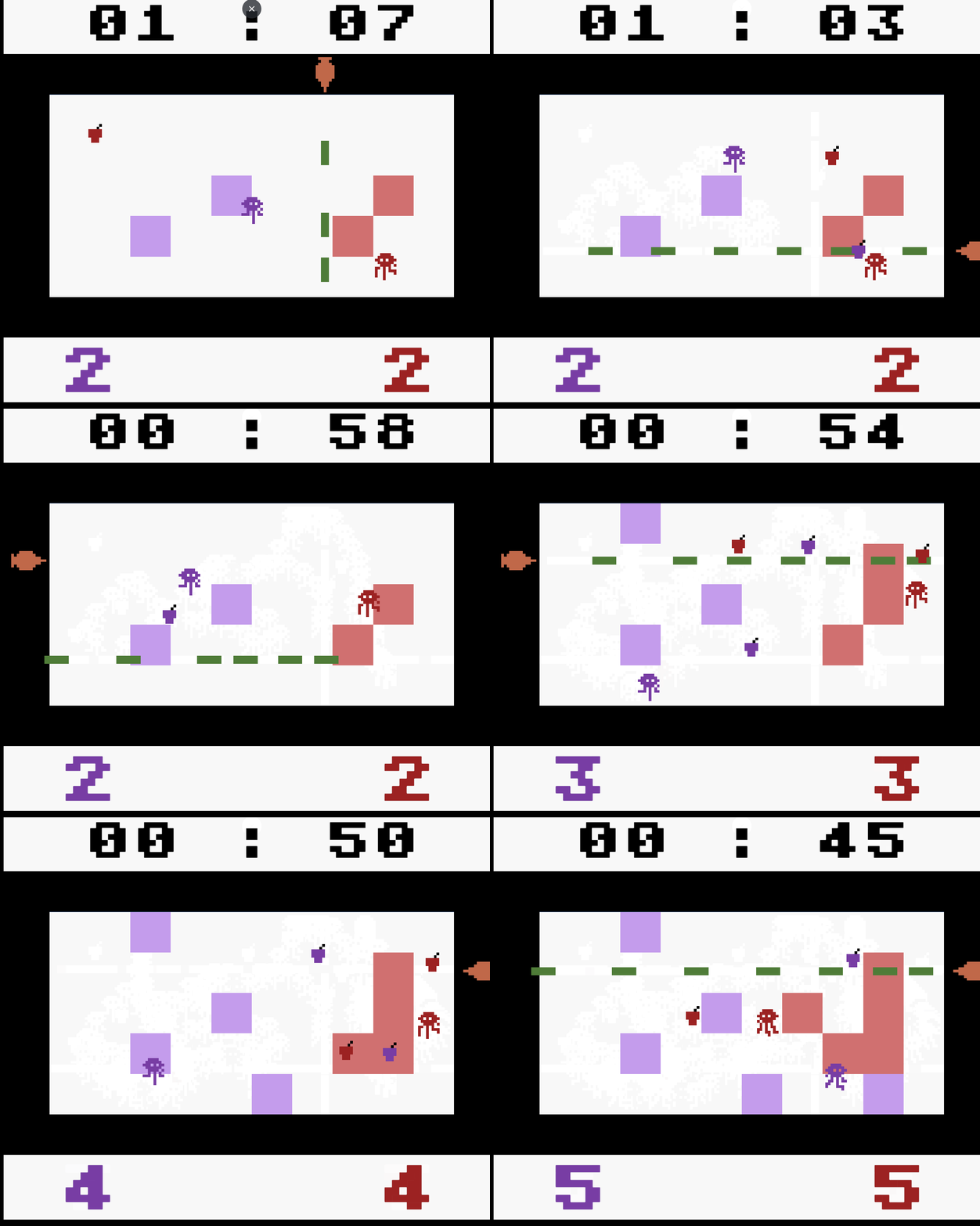
Strategic Depth in Simplicity
-
Movement vs Sabotage: Do I chase territory or slow my rival down?
-
Bucket Economy: Do I go for a nearby bucket, or gamble on cutting across the map?
-
Turret Zones: Do I risk slowdown by passing near turrets, or take the long way around?
All of these decisions emerge naturally from three simple rules, giving the game both accessibility and surprising depth.
Core Game Loop
-
Collect Paint Buckets – Players must grab buckets of their own color to paint.
-
Paint Tiles – Each tile covered contributes to the score.
-
Engage in PvP – Paint other players tiles convert them to you.
-
Arena Control – Bucket scarcity force strategic movement and positioning, and turrets may slow players down.
-
End Condition – When time runs out, the player with the most painted tiles wins.
Philosophy: Rules are simple, but mastery comes from pacing, resource control, and tactical decisions.
Pacing & Scarcity
-
Buckets as Resources: Players cannot paint indefinitely; they must plan routes around bucket spawns.
-
Turrets: Static threats that slow players, acting as territorial obstacles that force route planning.
These mechanics were designed to create tension without adding complexity — perfect for short party matches.
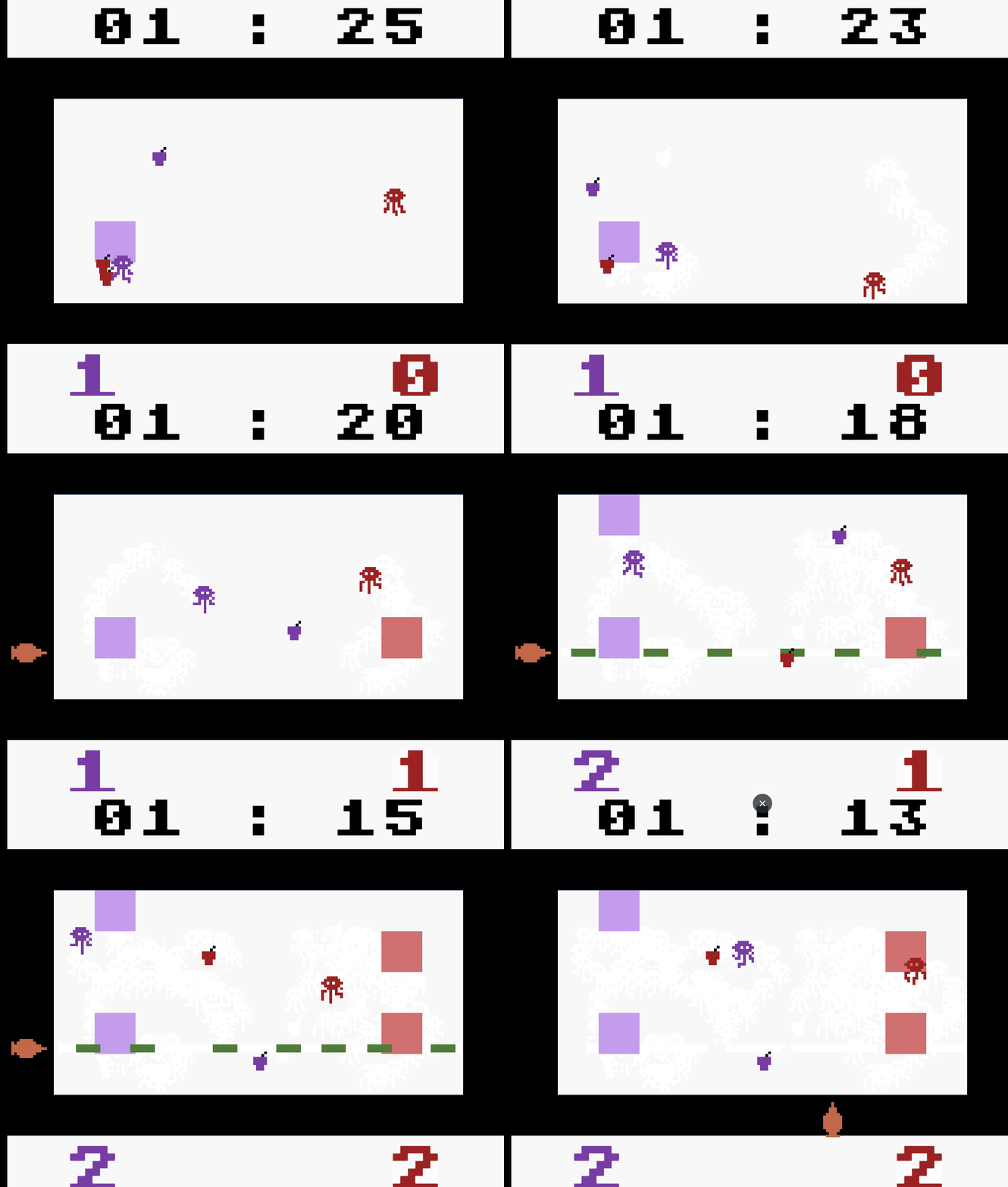
Iteration and Feedback
The Problem
During early playtests, we noticed that players often stayed in one position after finding a good bucket spawn or safe zone. This led to less movement and reduced the excitement of the matches.
The Solution
-
Random Turret Spawning: Introduced turrets that appear unpredictably around the arena.
-
Turrets shoot projectiles that slow players down, making it dangerous to stay in one spot for too long.
-
Bucket spawning on different locations and each player having one specific bucket.
The Result
-
Matches became more dynamic, with players actively moving across the map.
-
Prevented “camping” strategies and kept the pace lively.
-
Increased both the chaos and fun factor, especially in a party setting.
Skills Applied
-
System Design: Balanced scarcity mechanics (buckets, slowdown, turret zones) to ensure fairness and replayability.
-
PvP Balancing: Tuned movement, shooting penalties, and match timers to sustain tension across rounds.
-
Retro Constraints as Design Drivers: Embraced Atari-inspired limitations to guide mechanics and aesthetics.
-
Party Game Philosophy: Focused on simplicity, fast onboarding, and high replay value (I want to win)
Outcome
-
Delivered a fast-paced, competitive party game with a clear identity.
-
Showcased how retro constraints can inspire modern mechanics.
-
Created a system where pacing, resource management, and strategy emerged from minimal inputs.
-
Strong candidate for party settings: quick to learn, fun to master, endlessly replayable.